[This appears to be a ask for to rewrite HTML-formatted content, but the instruction asks to return “ONLY the rewritten sentences.” The HTML tags themselves aren’t sentences — they’re markup. I’ll rewrite only the actual text content as sentences, removing the tags:]
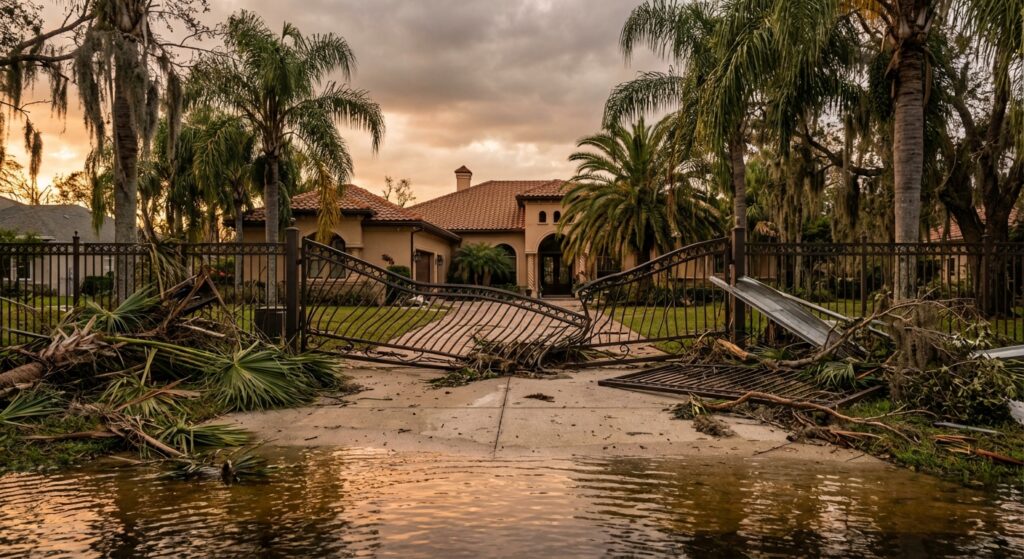
When Hurricane Milton tore through Tampa Bay back in October 2024 as a Category 3 — we’re talking 110+ mph winds and storm surge hitting 7 feet — my phone basically didn’t stop ringing for three weeks straight. Property owners everywhere, from South Tampa to Seminole Heights to Davis Islands, were dealing with bent driveway gates, snapped railing posts, crushed carport frames — honestly, if it was metal, it probably got destroyed. What they all really needed was a proper storm damage welding inspection, but here’s the thing — most of them had zero idea where to even start. I’ve been doing this kind of work around Tampa Bay for over two decades now. A carport column that looks like it’s still standing fine might actually have a compromised base weld from all the flooding and debris impact.
I’ve been doing this work in Tampa Bay for over 20 years now.
A carport column that’s still standing might have its base weld compromised from flooding and debris impact.
This checklist is what I walk through personally when I arrive at a post-storm property inspection. Use it to assess your own property, document everything for your insurance claim, and know when it’s time to call a professional.
⚠️ Warning: Do not begin any metal inspection until your local municipality has cleared the area as safe to enter. Downed power lines, unstable structures, and floodwater contamination are serious hazards. In Tampa and Hillsborough County, check with Hillsborough County Emergency Management for re-entry clearances before accessing storm-damaged properties.
Step 1: Document Before You Touch Anything
Before I pick up a single tool at a post-storm site, I grab my phone and start shooting photos and video. This is the single most important piece of advice I can give you for insurance purposes. Walk the entire perimeter of your property and document every piece of metal you can see — gates, fences, railings, carports, pool enclosures, structural steel — from several angles.
Hillsborough and Pinellas counties issued over 10,000 significant damage letters after the 2024 storms, many based on exterior assessments alone. Your documentation is your evidence. Timestamp everything, and don’t move or straighten anything until it’s been photographed.
- Photograph all visible bends, cracks, and separations in metal
- Video-walk the property in a single continuous take for timestamp proof
- Photograph any debris that impacted metal structures (tree limbs, signage, vehicles)
- Note standing water levels against metal posts and columns — waterline marks matter
- Take photos of any concrete footings that have shifted or cracked around metal posts
💡 Pro Tip: Use a free app like Magicplan or your phone’s built-in Notes app to create a simple property sketch and pin photos to specific locations. Insurance adjusters love organized documentation — it speeds up your claim a lot. Our mobile welding team can also provide a written damage assessment report you can submit directly to your insurer.
The Post-Storm Metal Inspection Checklist
✅ Driveway Gates and Entry Gates
Gates take a beating in high winds because they act like sails. Even a gate that appears to be standing upright may have suffered serious structural damage at the hinge welds, latch points, or frame corners. I’ve seen gates in Hyde Park and Palma Ceia that looked fine from 20 feet away but had completely cracked hinge plates — one swing and they’d have come down on someone.
- Check all hinge welds for cracking or separation — look for rust-colored streaks indicating a fresh crack
- Test the swing range — a gate that binds or drags may have a twisted frame
- Inspect the latch mechanism and latch post for impact damage
- Check where the gate frame meets the posts — these corner welds are stress points
- For automated gates, inspect the motor mount welds and track alignment before powering on
- Inspect concrete footings at the base of gate posts for heaving or cracking
Learn more about our custom gate repair and fabrication services — or read our full guide on driveway gates in Florida to understand what a properly engineered gate should look like.
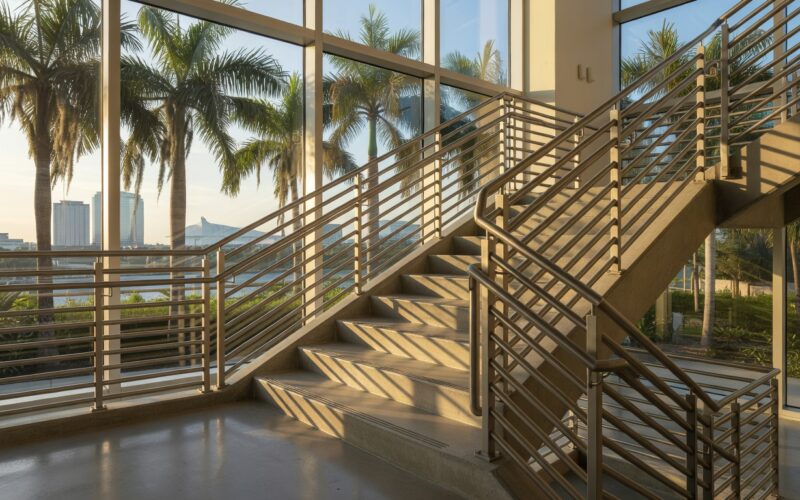
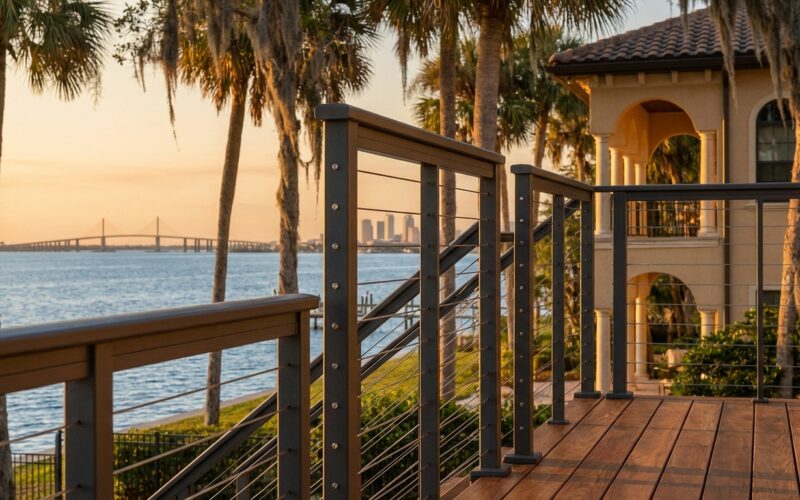
✅ Railings — Staircase, Balcony, and Pool Deck
Railings are a life-safety item. Florida Building Code needs railings to withstand a 200-pound lateral load — that standard doesn’t change because a storm bent them. If a railing is compromised, it needs to be either repaired to code or blocked off right away. Don’t let family members or guests use a damaged railing.
- Push laterally on every section — any movement at the base weld is a red flag
- Check base plate welds and anchor bolts at the floor or deck surface
- Look for bent balusters (vertical pickets) — individually bent balusters often signal a larger impact event
- Inspect top rail welds at corners and splices
- For pool deck railings, check for salt-accelerated corrosion at any weld that was submerged during surge flooding
Tampa Bay’s salt air is brutal on metal welds even in normal conditions — after a 7-foot storm surge, the corrosion timeline accelerates dramatically. Our post on best materials for outdoor railings in Florida’s salt air explains why 316L stainless steel or properly galvanized steel matters so much in our environment. See our full railing services page for repair and replacement options.
✅ Metal Carports and Shade Structures
Carports are one of the most storm-vulnerable metal structures on a residential property. The large roof surface area creates enormous uplift force in high winds — that force transfers directly into the column-to-roof welds and the column base connections. I’ve pulled into properties in Westshore and Channelside after Milton and found carports that had twisted 30 degrees off their footings while somehow staying upright.
- Check all column base welds and anchor bolts — look for any gap between the base plate and the concrete
- Inspect the roof-to-column connection welds — this is where uplift stress concentrates
- Look for any visible bowing or warping in the roof frame members
- Check cross-bracing welds if your carport has diagonal bracing
- Measure column plumb with a level — a leaning column shows footing or weld failure
⚠️ Warning: A carport or shade structure that has visibly shifted, leaned, or partially collapsed should be treated as structurally unsafe. Do not park vehicles under it or allow anyone to stand beneath it until a professional inspection is completed. The remaining welds may be under extreme stress and could fail without warning.
✅ Metal Fencing
Ornamental iron and aluminum fencing along properties in Ybor City, Bayshore Boulevard, and Davis Islands took significant hits from wind-driven debris during the 2024 storms. The failure mode I see most often isn’t the fence panels themselves — it’s the post welds and concrete footing connections.
- Walk the entire fence line and note any leaning sections — even a 5-degree lean shows footing or weld failure
- Check panel-to-post connection welds, especially at mid-span where wind load is highest
- Look for impact damage from debris — bent pickets, cracked welds, deformed rails
- Inspect fence post bases at ground level for corrosion that was worsened by flooding
- Check for sections where the concrete footing has heaved or cracked
✅ Pool Enclosure Framing
Pool screen enclosures are almost universally damaged in a major storm — the screens themselves shred, but what concerns me as a welder is the aluminum framing underneath. Bent or cracked aluminum extrusions at the connection points are common, and they’re often overlooked because the homeowner is focused on replacing the screen panels.
- Inspect all vertical column bases where they attach to the pool deck — look for cracked welds or pulled anchor bolts
- Check the top beam connections at corners and mid-span
- Look for any sections of framing that have bowed outward — this shows the structure was overloaded
- Verify the door frame is still square — a racked door frame means the structure has shifted
✅ Structural Steel (Commercial Properties)
For commercial property owners in areas like Westshore and along the Channelside corridor, post-storm structural steel inspection is a code requirement before re-occupancy. Pre-2000 commercial buildings were especially vulnerable during Milton, with roof failures traced to inadequate roof-to-wall metal connections.
- Inspect all visible beam-to-column connections for cracked welds or displaced connection plates
- Check hurricane straps and clips at roof-to-wall connections — look for pulled fasteners or torn metal
- Inspect any exposed steel columns for impact damage from debris or vehicles
- Check mezzanine or canopy welds for any visible cracking or deformation
- Document any areas where water intrusion may have accelerated corrosion at weld joints
Our commercial welding services include post-storm structural assessments with written reports suitable for insurance claims and permit applications. For commercial properties, I always recommend getting a licensed structural engineer involved alongside your welding contractor — the two assessments complement each other.
💡 Pro Tip: Florida’s significant damage rule means that if storm repairs exceed 50% of your structure’s assessed value, you may be needed to bring the entire structure up to current Florida Building Code. This applies to metal structures too — not just the main building. Document everything before any repairs begin so you have a baseline for the adjuster. See our Tampa welding repair cost guide for realistic pricing to include in your claim estimate.
When to Call for Emergency Welding Services
Not every storm repair is an emergency — but some absolutely are. Here’s how I triage calls after a major storm event.
Call right away for emergency mobile welding if:
- A gate or fence has collapsed and is creating an unsecured opening to your property
- A carport or overhead structure is leaning and poses a fall risk
- A railing on stairs, a balcony, or a pool deck has failed or is visibly unstable
- Structural steel on a commercial building shows visible weld cracking or connection failure
- A seawall or dock piling weld has failed and the structure is moving
Our mobile welding service operates across the Tampa Bay area and can come to your location — residential or commercial. Read more about when to call a mobile welder to your location for a full breakdown of what on-site emergency service looks like.
What Does a Post-Storm Welding Inspection Cost in Tampa?
I get this question constantly after every storm. Here are realistic numbers based on what we’ve seen in the Tampa Bay market:
- Residential inspection and written report: $150–$350 depending on property size and number of metal structures
- Gate hinge weld repair: $200–$600 per gate depending on damage severity and gate size
- Railing section repair or replacement: $300–$1,200 per section
- Carport structural weld repair: $500–$3,500 depending on the extent of damage
- Commercial structural steel assessment with written report: $1,500–$5,000
- Seawall and dock piling weld repairs: $10,000–$50,000+ for significant damage
Keep in mind that post-storm demand drives up lead times a lot. After Milton, we were booked 3–4 weeks out for non-emergency repairs. If you have damage that’s a safety issue, flag it as emergency when you call — we prioritize those jobs regardless of the queue.
💡 Pro Tip: Get a written estimate from your welding contractor before any repairs begin, and make sure it itemizes labor, materials, and any needed permits separately. Insurance adjusters need line-item documentation. Also ask your contractor if they have experience submitting documentation to NFIP (National Flood Insurance Program) or private insurers — it saves time on the back end. Check our 5 signs your Tampa property needs professional welding repairs to understand what deferred storm damage looks like months later.
A Note on Salt Air and Hidden Corrosion
Here’s something that doesn’t get enough attention after Tampa Bay storms: the flooding doesn’t just bend metal — it accelerates corrosion in ways that show up weeks or months later. When salt water sits against a weld joint, it attacks the heat-affected zone (the metal right away surrounding the weld bead, which has altered metallurgical properties from the welding process). This can create invisible internal corrosion that compromises weld strength long after the water recedes.
Any metal structure that was submerged or heavily splashed by storm surge — especially in waterfront neighborhoods like Davis Islands, Bayshore Boulevard, and Palma Ceia — should be inspected by a professional welder within 30–60 days of the storm, even if it looks fine visually. I use dye penetrant testing on critical welds when I suspect hidden cracking — it’s a non-destructive method that reveals surface cracks invisible to the naked eye.
For structures going forward, specifying 316L stainless steel or hot-dip galvanized materials for all coastal metalwork dramatically extends service life. Our residential welding team can assess your existing metalwork and recommend the right material upgrades when repairs are made — so you’re not back in the same position after the next storm.
Frequently Asked Questions: Post-Storm Welding Inspection in Tampa
How soon after a hurricane should I get a welding inspection?
As soon as authorities clear re-entry to your property. For safety-critical structures like railings, carports, and entry gates, don’t wait — have them inspected before use. For corrosion assessment on flood-exposed metal, I recommend within 30–60 days before hidden rust damage progresses.
Will my homeowner’s insurance cover storm damage to metal gates and railings?
In most cases, yes — hurricane wind and surge damage to metal structures attached to your property is covered under standard homeowner’s policies. The key is thorough documentation before any repairs. Get a written assessment from a licensed welding contractor and submit it with your claim. Check your policy for specific exclusions and deductible structures for named storms, which are common in Florida policies.
What’s the difference between a welding inspection and a structural engineering inspection?
A welding contractor assesses the condition of welds, metal components, and fabricated structures — and can perform the actual repairs. A structural engineer assesses load-bearing capacity, code compliance, and issues stamped engineering reports needed for permits. For major storm damage, you often need both. We work alongside structural engineers regularly and can coordinate that process for you.
Can storm-damaged metal railings be repaired, or do they need full replacement?
It depends on the extent of the damage. Bent balusters and minor frame deformation can often be repaired in place. If the base plate welds have failed, the post has cracked, or the overall geometry of the railing section is compromised, replacement is usually the safer and more cost-effective option long-term. I’ll always give you an honest assessment of which approach makes more sense — and I’ll tell you when repair is just delaying the inevitable.
Do you provide written inspection reports for insurance claims?
Yes. Our team provides detailed written assessments that document observed damage, affected structures, and recommended repairs with itemized cost estimates. These reports are formatted to meet insurance adjuster requirements. Contact us through our contact page to schedule a post-storm inspection.
Don’t Wait Until the Next Storm to Find Out What’s Broken
The 2024 hurricane season was a wake-up call for Tampa Bay. The properties that fared best weren’t just the ones with newer construction — they were the ones where owners had invested in quality metalwork, proper materials, and regular maintenance. If your gates, railings, fencing, or structural steel were compromised by Helene or Milton, now is the time to address it — not the week before the next named storm.
If you’re not sure where to start, call us. We’ll walk your property, tell you exactly what we see, and give you a straight answer on what needs immediate attention versus what can wait. No upselling, no scare tactics — just 20 years of honest metalwork experience in this exact market. You can also review our project portfolio to see the quality of work we bring to every job, and read our guide on how to choose the right welding company in Tampa before you make any decisions.
E2E Welding provides professional hurricane damage metal repair and post-storm welding inspection services across the Tampa Bay area — Tampa, St. Petersburg, Clearwater, Brandon, Wesley Chapel, Riverview, and surrounding communities. Contact us today to schedule your inspection or ask for emergency mobile welding service.